 NEW2
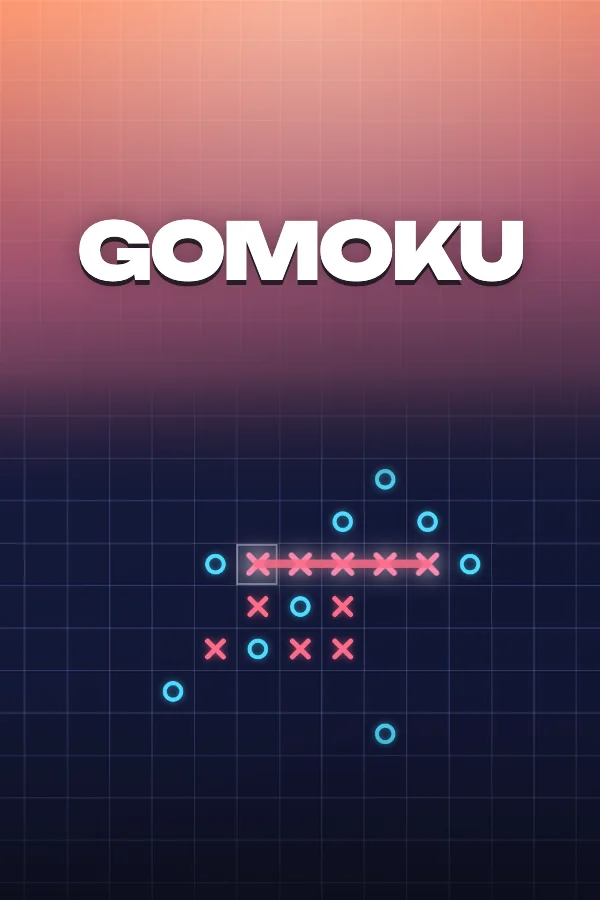
Gomoku
 by ZotaGame
1 likes9 plays
Take turns dropping X and O on a 15×15 grid and race to five in a line. Face a computer that reads four moves ahead, or a friend on the same screen.
What is Gomoku?
Gomoku is a five-in-a-row strategy game for the browser: two sides fill a 15×15 grid one mark at a time, and whoever first lines up five X's or five O's across, down or on a slant takes the game. Play it against a computer set to Easy, Medium or Hard, where Hard hunts for forced wins built from fours, or pass one phone between two people. For a stricter game, the blocked-ends rule from Vietnamese caro voids any five hemmed in by the opponent's marks at both ends.
Updated
How to play Gomoku
Goal: Get five or more of your own marks into one unbroken line, horizontal, vertical or diagonal, before the other side manages it with theirs.
- Open Options to pick your opponent (Computer or 2 players), the computer's level and the rule, then press Start.
- Against the computer you are X: tap or click any empty square, and O answers a moment later.
- With two players, X and O alternate on one device, so hand it over after each mark.
- On a touch screen, tap a square once to preview your mark with row and column guides, then tap it again to place it.
- Press Undo when a move goes wrong: against the computer it removes your last mark and its reply together.
- The game ends when someone completes five in a line, which lights up on the board, or in a draw if all 225 squares fill up.
Controls
| Key | Action |
|---|---|
| Tap a square, then tap it again | Preview, then place your mark on a touch screen |
| Click a square | Place your mark with a mouse |
| Arrow keys, then Enter or Space | Move around the board and place a mark |
| U, ZBackspace | Undo the last move |
| NOEsc | New game, open Options, close the open sheet |
Tips & tricks
- Count open ends, not just marks: three in a row with empty squares on both sides is more dangerous than a four already capped at one end.
- Place marks where a row and a diagonal of yours meet, so a single move can grow two lines and create two threats at once.
- When you make a four, the computer has to block it, so you decide where its next O lands. Use that forced reply to set up your next line.
- Warm up on Easy: it fails to block your four about 3 times in 10, so you can try out winning shapes before moving up to Medium.
- Under Blocked ends, the board edge never counts as a block, so a five that runs into the border still wins even with an O at the other end.
Frequently asked questions
Can you beat the Hard computer in Gomoku?
Yes, but it takes a plan. Hard plays any winning threat it sees, searches for forced wins made only of fours and reads four moves ahead before it commits. It weighs only its most promising squares, so a slowly built double threat, such as a four and an open three made with one mark, is the usual way through.
Is Gomoku the same game as caro?
Very nearly. Caro is the Vietnamese name for five in a row on a grid, and this version offers both common rule sets: Free, where any line of five or longer wins, and Blocked ends, the stricter caro rule where a five closed off by the opponent's marks at both ends does not count.
Does the board edge count as a block under Gomoku's blocked-ends rule?
No. Only the opponent's marks can close an end. A five that runs into the edge of the 15×15 board still wins even when an O sits on its other end, so lines along the border are safer under this rule than they look.
What happens to my score in Gomoku when I change the computer level?
Each opponent keeps its own tally. Wins, losses and draws against Easy, Medium and Hard, and in 2-player games, are counted separately and kept between visits, so a streak on Easy never mixes with your record on Hard. Changing the level also starts a fresh game with X moving first.
Can two people play Gomoku on one phone?
Yes. Choose 2 players in Options and X and O take turns on the same screen, passing the phone after each mark. Undo removes only the last mark in this mode, and starting a New game after a played one hands the first move to the other player.